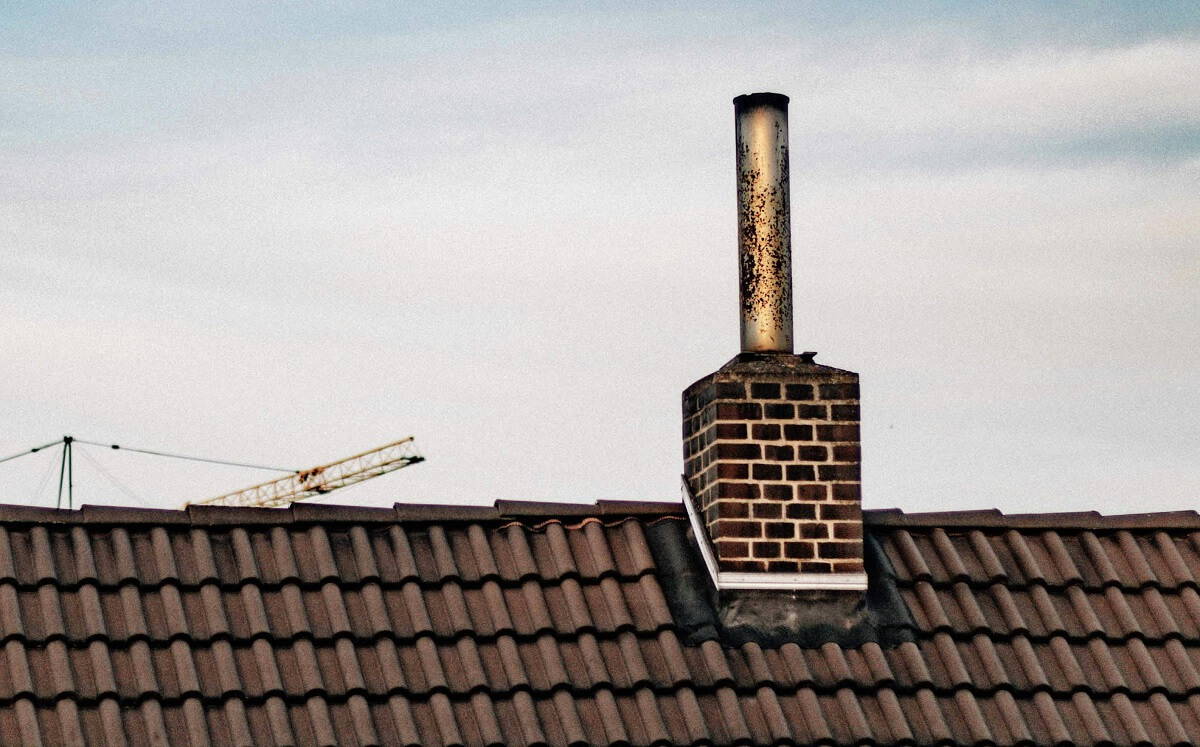
What are the rules for chimney height and clearances in England?
Are you planning to install a wood burning stove? Then you need a flue that works properly. If you do not yet have a chimney or flue system, this page explains which rules apply in England for chimney height and the required distances to other elements.
Please note: this knowledge article is specifically about legislation and building regulations in England. Different rules may apply in Scotland, Wales and Northern Ireland.
Chimney height regulations for a stove
In England, chimney heights and clearances, both within the building and in relation to neighbouring properties, are mainly set out in the Building Regulations, specifically Approved Document J, and the rules for Permitted Development.
Below is the full overview of the legal requirements for height and distances.
To create a safe, well performing draught and to prevent flue gases from spilling back or failing to disperse properly, the following minimum heights apply:
Overall height. A total vertical flue height of around 4.5 m can be sufficient in many cases, provided the terminal is positioned in line with the guidance.
Near the ridge. If the chimney passes through the roof within 600 mm (measured horizontally) of the roof ridge, the chimney must terminate at least 600 mm above the ridge.
Lower down on a pitched roof (the 2.3 metre rule). If the chimney is positioned lower down on a pitched roof (more than 600 mm from the ridge), the top must be at least 2300 mm (2.3 m) away from the roof surface when measured horizontally. In addition, the guidance sets an important “either/or” requirement for vertical height: the terminal must either be at least 1000 mm above the highest point where the flue passes through the roof, or be at least as high as the roof ridge. This combination of distances supports good draught and helps prevent wind pushing smoke back down the chimney.
The “3-2-10 rule”. In practice, the “3-2-10 rule” is often used as a rule of thumb. The chimney should extend at least 3 feet (900 mm) above the roof, and at least 2 feet (600 mm) higher than anything within a horizontal radius of 10 feet (3 m). Please note: this is not the formal set of dimensions from Approved Document J.
Chimney clearances to obstacles, neighbours and combustible materials
The discharge must not pose a risk to people’s health or to the fire safety of surrounding structures. Here, the 2300 mm figure is again a key reference point:
Windows and dormers. If the chimney is within 2300 mm of an opening roof window, or if the terminal is lower than that window, the chimney must terminate at least 1000 mm above the window.
Adjacent buildings. If another building, for example, a neighbour’s home, is so close that part of it lies within a 2300 mm radius of the chimney, the chimney must terminate at least 600 mm higher than that specific part of the neighbouring building.
Combustible roofs. For roofs made of combustible materials such as thatch or felt, larger clearances apply. Here the chimney must terminate at least 1800 mm vertically above the roof surface, often combined with a minimum of 600 mm above the ridge or a 2300 mm horizontal clearance to the roof.
Internal clearances. For distances to combustible materials (such as timber), always follow the manufacturer’s stated classification. For insulated twin wall systems, this is the G rating (for example, G50 means a required clearance of 50 mm). For a single wall stove pipe, the minimum clearance is often three times the pipe’s diameter, unless a suitable heat shield is installed in line with Approved Document J.
Maximum height and planning permission
Finally, the chimney height required for safe operation can sometimes conflict with planning rules that protect the appearance of the street scene:
The 1 metre limit. In England, installing or altering a chimney is generally classed as Permitted Development as long as the chimney does not project more than 1 metre above the highest point of the roof (the ridge).
Planning permission. If your chimney needs to be higher (for example, to comply with the 2.3 metre rule in Approved Document J) and it therefore projects more than 1 metre above the ridge, you officially need planning permission.
Structural limit. To reduce the risk of a chimney toppling, Approved Document A states that the free standing height of a traditional masonry chimney must never exceed 4.5 times its narrowest width, unless it is structurally anchored or braced.